
Clark County Civil Docket Searches
Start at Indiana MyCase and pick Clark County. An exact case number is the fastest path. The Name tab takes individuals or businesses. Advanced options filter by open or closed status, filing dates, or the Civil, Family, and Probate category. Cast too wide a net. You may pull in unrelated parties or hit the 1,000-result cap.
Before opening the CCS, confirm the case style, the assigned court, and the case type. Check the filing date and the status too. If a case or document is missing from the docket search, call the Clark County Clerk at 812-285-6244. You can also contact the assigned Circuit Court or visit 501 E Court Avenue. Court records live with the clerk where the case was heard. Transcripts come from the court reporter. Ask the office about mail and current copy options. Request the full fee and delivery schedule when you do.
- Select Clark County in the court list.
- Use the full case number or a narrow party or business name.
- Limit the date, status, and civil category.
- Match the court and case type before opening the summary.
- Request the official document from the clerk when needed.
Clark Civil Cases Follow Allocation Rules
Which Clark Circuit Court hears a civil case depends on the current local allocation order. Mortgage foreclosure lands in Circuit 1. Eligible tort, plenary, and commercial cases go to Circuit 6. Collection cases are balanced between Circuits 5 and 6. Small claims and evictions spread across Circuits 1, 2, and 5.
Domestic-relations matters follow that same 1, 2, and 5 pattern. Reciprocal support and IV-D child support belong to Circuit 6. Protection orders generally do too, unless tied to another family or paternity case. Estates, adult guardianships, trusts, and tax-sale matters sit in Circuit 1. Child guardianships and adoptions go to Circuit 4. Search the assigned court's docket rather than assuming one court holds every civil filing.
Civil Dockets: What They Show
A civil summary pulls together the caption, case number, court, type and subtype, filed and status dates, parties, attorneys, related cases, and the chronological event list. The events name complaints, summonses, subpoenas, returns, appearances, motions, orders, settings, judgments, and public documents. A civil file usually has no charge or bond block, unlike a criminal summary.
| Caption | The case style identifying parties or the kind of proceeding. |
|---|---|
| Case number | The Indiana court, year/month, type, and sequence identifier. |
| Events | Dated filings and court actions in the Chronological Case Summary. |
| Hearing session | Date, time, court, judicial officer, result, or cancellation when supplied. |
| Document | A linked public filing or order when remote access is authorized. |
The Indiana Rule 5 page explains why certain civil fields and files stay out of the public docket.
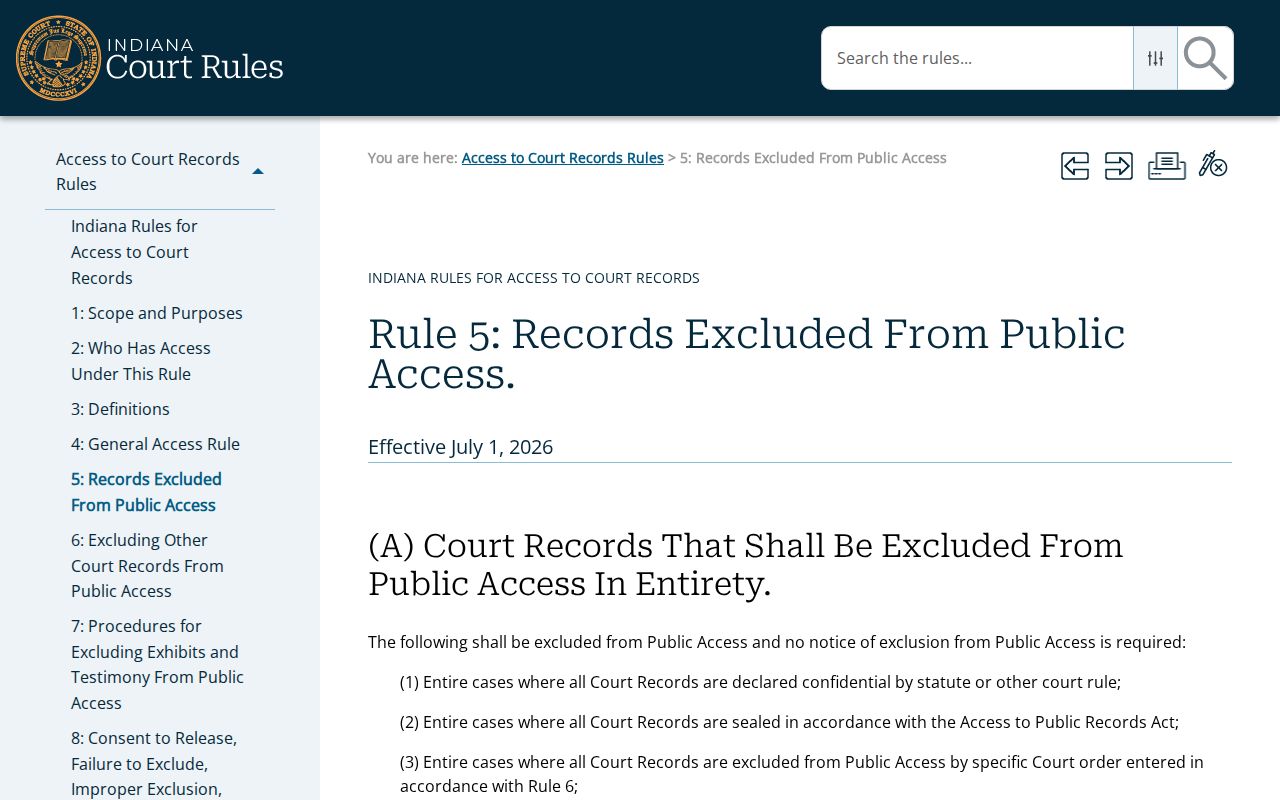
The image documents the controlling access source, not a sample party record.
Clark Filing Fees Are Not Copy Fees
The Clark Clerk sets filing fees by case code. Civil collection, plenary, tort, mortgage foreclosure, adoption, and expungement with a conviction each run $157. Divorce, estates, estate miscellaneous matters, guardianship, and trusts cost $177, and juvenile paternity is $196. Protection orders and no-conviction expungement carry no charge. Paper small claims and eviction filings are $97, or $87 when e-filed.
Those sums only open a case. They say nothing about the cost of a plain docket copy, a certified order, an online case lookup, or electronic delivery. Added defendants and service bring their own costs. The Clark Clerk publishes no universal civil-copy schedule. So ask for the current price and spell out whether you need filing, service, copying, or certification.
What Cases Fill the Civil Docket
Several legal categories fill Clark County civil court dockets, and the case code routes each filing to its track. The Clerk's fee table lists those types without saying anything about their merits.
| Clark category | Examples | Usual allocation |
|---|---|---|
| General civil | Collection, tort, plenary, commercial, foreclosure | Circuits 1, 5, or 6 by type |
| Small claims | Small claim and eviction | Circuits 1, 2, and 5 |
| Family | Divorce, support, paternity, protection orders | Several courts under local rule |
| Probate | Estate, guardianship, adoption, trust | Circuits 1 or 4 by matter |
A case type is just a routing label. It is not a judgment, and the court's exact order controls the result.
Clark Small Claims Use Distinct Codes
Small claim and eviction records carry SC and EV codes. On MyCase, you can see the case subtype, filing events, and parties. Settings, judgments, and public documents appear too. A future session may show a small-claims collection hearing. It may also show an eviction hearing on the calendar. Confirm with the court first, because any listed future event can be reset.
The Indiana Access to Court Records Rule 10 sets out the official access rules. Those rules govern these civil records.
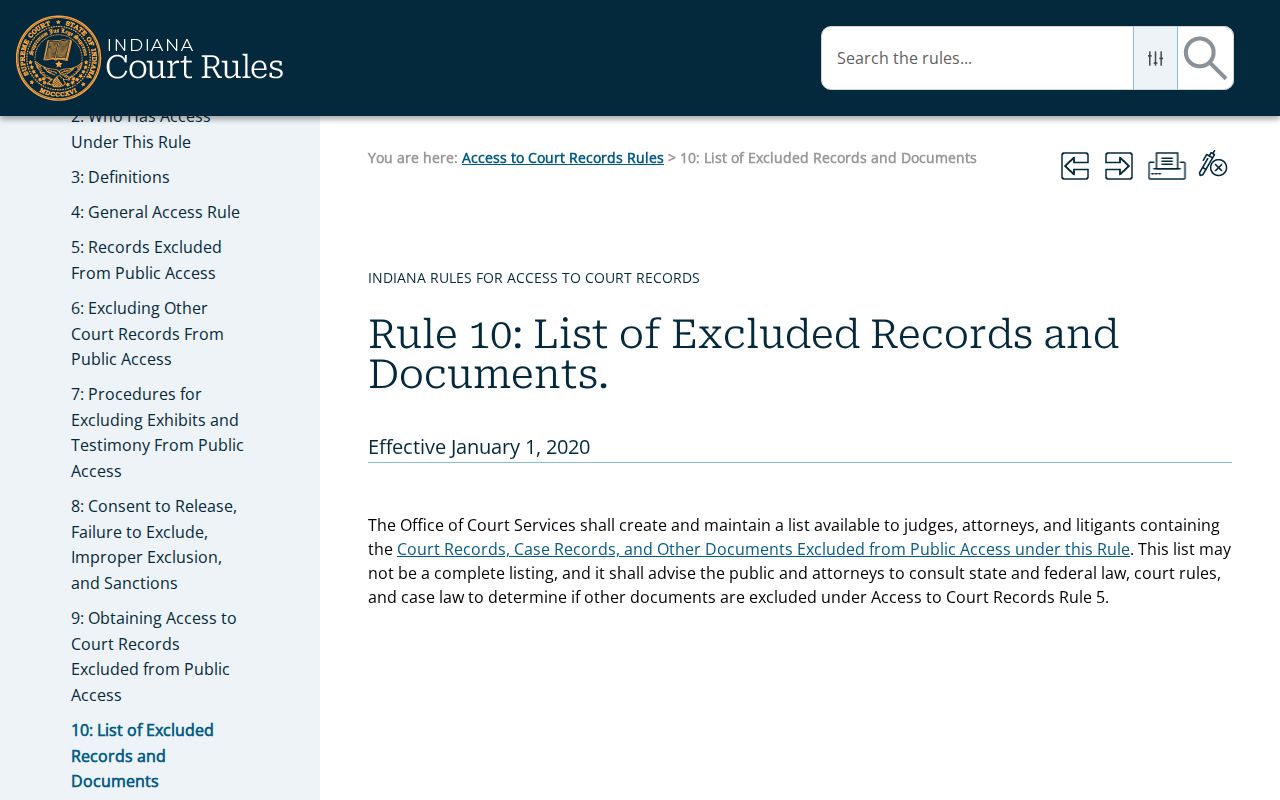
Read the docket event by event. A filing label alone proves neither service, nor a hearing that went forward, nor an entered judgment.
Hearings on the Civil Docket
A Clark civil setting may list the session date and time. It may also show the court, judicial officer, event description, result, comment, or cancellation. Not every event shows a location in the public summary. Indiana Administrative Rule 9 requires daily calendars to make the case number, caption, date, time, and location available electronically or otherwise. The assigned court remains the best fallback.
A continuance moves a setting without ending the case. A summons entry marks a docket step, not proof of legally sufficient service. For a deadline or an appearance, read the newest CCS entry. Then confirm with the court. The full scheduling workflow is laid out in the Clark County court schedule.
Clark Case Numbers Have Four Groups
Indiana Administrative Rule 8 breaks a Clark County case number into four groups. One group names the court. Another pairs the year and month. A third flags the case type, and the last gives the sequence. MyCase tolerates missing hyphens and dropped leading zeroes. Copying the number exactly as filed is the safer habit. A civil case moved between courts can carry more than one number over its life. So run a docket search on each known number if the newest draws a blank.
The official Administrative Rule 8 page spells out the full format.
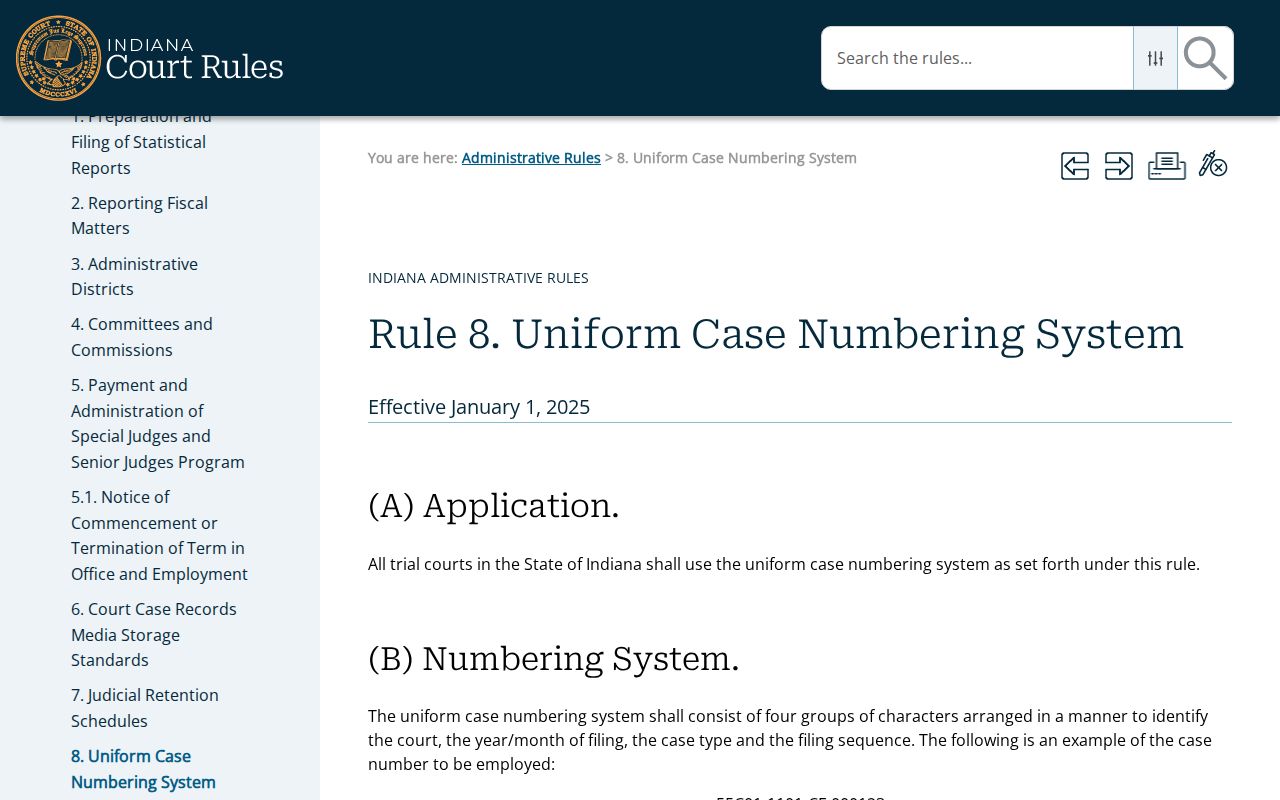
Never guess at a Clark County case number from a party name. Lift it straight from a pleading, order, notice, or clerk response, and then confirm the court on the result matches.
Clark Protective Orders Search Elsewhere
Protection-order cases get their own portal. They live on the separate Indiana protection-order portal rather than the ordinary public party-name search. Clark County usually assigns them to Circuit 6. The exception comes when a case ties into another family or paternity matter. Rule 5 can also keep identifying details and related court records out of public view.
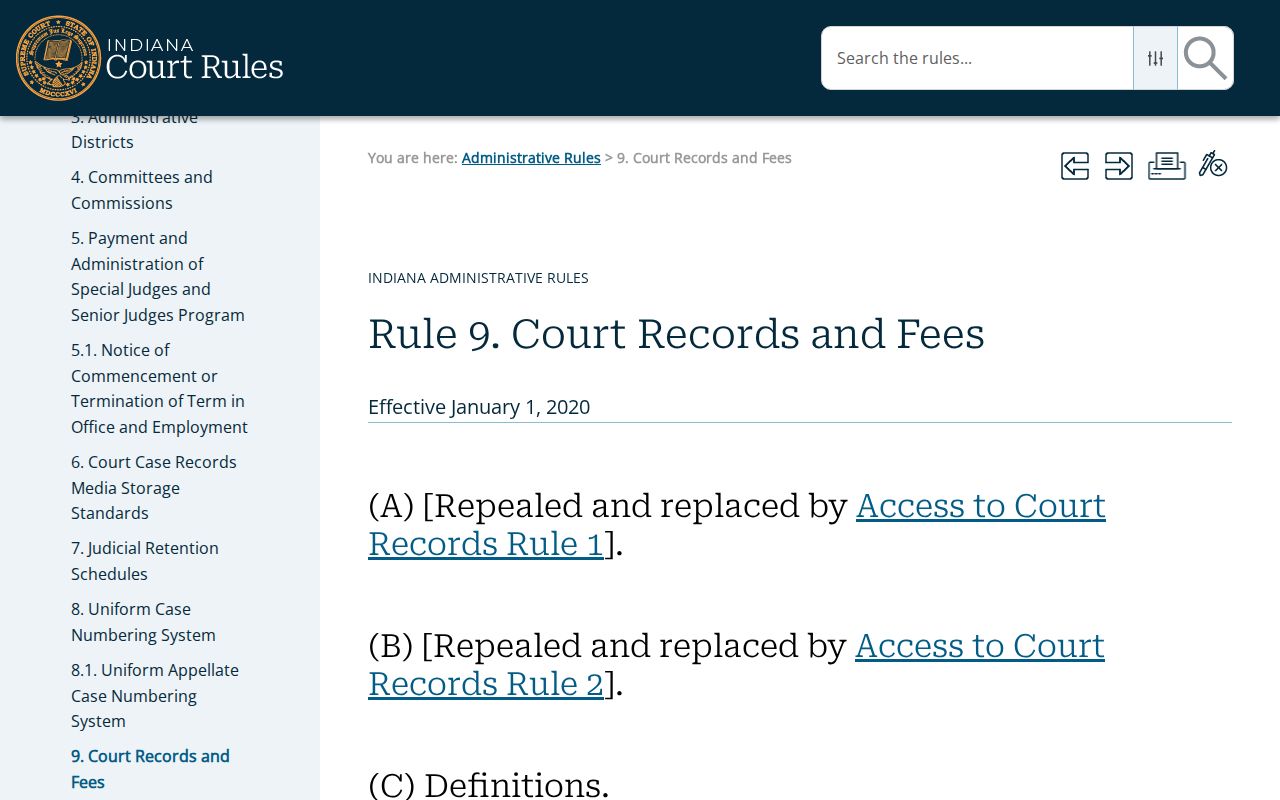
Rule 9 opens a formal, narrow door to some of that excluded material. It is narrow on purpose. The official Rule 9 page lays out the process.
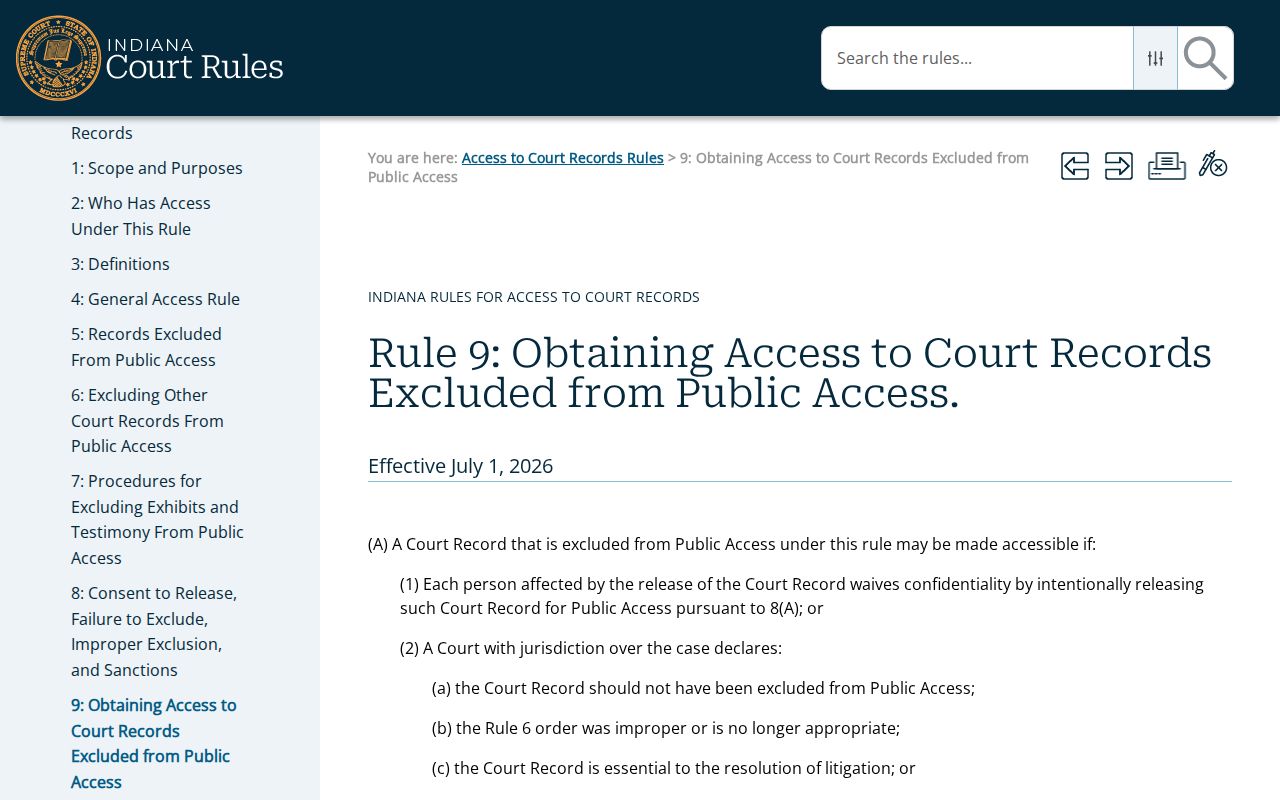
A verified request must show extraordinary circumstances or public interest, plus harm and prejudice. The record stays confidential while the judge weighs it. No filter in MyCase gets you there.
Who Can See Civil Dockets
Rule 4 starts from openness. Rule 5 then carves out protected cases, records, and data. A Clark County family or civil file can hold a lot. Think of medical or treatment records, account credentials, custody evaluations, CASA or guardian ad litem reports, ex parte material, and anything restricted by statute, privilege, or order. A public CCS entry may show that an event happened. The document itself stays sealed.
Administrative Rule 9 governs remote and bulk access to court records. The official rule sets those terms out in full.
The statewide portal gives a public view, not a certified file. Ask the Clerk whether a missing item is restricted, sealed, undigitized, or simply waiting at the counter.
Public access has limits: A missing result does not prove that no Clark County civil case exists. Use the least identifying facts needed when asking about a restricted matter.
Indiana Law and Clark Civil Access
Two bodies of law govern access here. Indiana's Access to Public Records Act covers public records generally. Court files are different. They answer to the Access to Court Records rules and the Supreme Court's administrative rules. So send a Clark County case request to the clerk of the responsible court. The clerk is the right address. A generic county records address will only slow it down.
Indiana Code Title 5, Article 14 holds the broader public-records source.
A complete request speeds everything up. Give the case number, case type, approximate year, parties or business, assigned court, document name, and date range. Say whether a plain or certified copy is what you need.