
Jeffersonville Court Docket Searches
For any case filed in an Indiana trial court, the official entry point is MyCase. Pick Clark County from the menu. Jeffersonville has no court option in the current selector. An exact case number works best. Citation and cross-reference numbers can also pull up a docket. If you search by name, narrow the filing-date range first. Then check the court, case type, filed date, parties, and status before you open anything.
- Read the citation, summons, or notice and identify the named court.
- Select Clark County in MyCase and enter the exact number when possible.
- Compare the result card with the document in hand.
- For a city ordinance issue, contact the Jeffersonville City Clerk or Ordinance Violation Bureau.
- Confirm a deadline or appearance with the assigned court.
MyCase shows public, nonconfidential Odyssey cases, but it is not the official court record. Some filings never make it online. Older coverage can have gaps too. When a docket search comes up empty, the case may be new, confidential, sealed, expunged, filed in another county, or held only by the office that keeps the record.
No Jeffersonville City Court
Neither the Indiana court directory nor the MyCase selector lists a Jeffersonville City Court. A historical county prosecutor page says the old court was abolished on December 31, 2015. Jeffersonville is the county seat. The Clark County courts sit there, but the city name alone does not create its own state-court docket. Search by the court field, not by where an event happened. Six Clark Circuit Courts divide the county trial work under local allocation rules. City offices, meanwhile, keep municipal records and handle ordinance functions. A city payment record and a Clark Circuit chronological case summary can grow from the same conduct. Yet they remain separate records in separate offices.
Routing point: choose Clark County for a state case. Use Jeffersonville offices for city ordinances, city payments, and municipal public records.
Inside Jeffersonville Municipal Records
The Jeffersonville City Clerk runs an Ordinance Violation Bureau along with the city's payment functions. City Hall sits at 500 Quartermaster Court. Call the Clerk at 812-285-6427; the Ordinance Violation Bureau uses 812-285-6437. Those channels cover city business only. For a case filed in Clark Circuit Court, they cannot substitute for the chronological case summary. That summary is usually called the CCS. The city lists in-person payment options. It also offers an online card route that charges a four percent fee. A payment entry proves the city received funds, nothing more. It does not show each case event or the final legal effect. Keep your receipt. Note which office issued it. Then ask for the disposition or final order when the outcome matters.
Jeffersonville County Court Center
Clark County's court work happens physically in Jeffersonville. The courthouse, Government Building, Judicial Center, all six Circuit Courts, and the Clerk connect to 501 E Court Avenue. The Clark County Clerk maintains trial-court records, processes filings, keeps permanent historical records, and handles court revenue. Reach the Clerk at 812-285-6244, or try 812-285-6399 for traffic questions. Online access is just one route among several. You can call the Clerk, visit the right office, or send a precise mailed request. Name the case number and the document you want, whether a complaint, dated order, judgment, or sentencing order. No single published Clark fee schedule covers every plain or certified copy, so confirm the cost and delivery method before you order.
Finding Jeffersonville Court Dates
A hearing date can show up in the MyCase CCS when remote access is permitted. Indiana Administrative Rule 9 also requires daily calendars or dockets to be posted electronically or by other means. The posting must list the case number, caption, date, time, and location. Still, a setting can move. Read the newest event on the docket. Then confirm with the assigned court before you travel.
| Date | The scheduled day in the latest hearing entry. |
|---|---|
| Time | The start time, which may be a docket call rather than a private appointment. |
| Courtroom | The room or court location in the notice. |
| Judge | The judicial officer assigned to the event. |
| Setting Type | Arraignment, pretrial, trial, compliance review, or another event. |
A continuance is a court-approved delay, never a dismissal. If the docket shows two dates, ask which entry controls. And a calendar listing does not guarantee that every attached document is open online.
Jeffersonville’s Two Record Addresses
City Hall at 500 Quartermaster Court and the county complex at 501 E Court Avenue serve different roles. Ordinance matters, council records, and city payments belong to city government. A Circuit Court filing, a CCS, or a certified case document belongs with the county Clerk or the assigned court. The Jeffersonville public-records policy states that its general policy does not cover the City Clerk or city court records. It points you to those offices instead. Respect that line. Give the date, ordinance number, or payment reference with your request. Never call a city administrative record a case docket unless a court has actually filed the matter.
Jeffersonville Traffic Ticket Lookups
Start with the ticket itself. The issuing court or agency is printed on it. County traffic cases can be searched through Indiana ePay by UTT number, driver-license number, or name and date of birth. For the broader CCS, hearings, documents, and public status, turn to MyCase. A new ticket may take ten business days to appear in ePay.
City ordinance questions may go to Jeffersonville’s Ordinance Violation Bureau. County citations go to Clark Traffic. Watch for scams. The Clark Clerk does not send traffic-payment requests by text, so never click a payment link from an unsolicited message; use the official portal or call the published number. Paying and contesting are separate paths. The citation’s appearance date controls your response.
Jeffersonville Ordinance or Disposition
The Jeffersonville Law Department handles corporation-counsel work and prosecutes ordinance violations for the city. An ordinance states a local rule. A complaint or citation only alleges a violation. A docket entry, by contrast, records a procedural event. The disposition is the recorded outcome. Blending these items together invites a false reading of the record.
- Ordinance
- A rule enacted by city government.
- CCS
- The chronological list of dated events in an Indiana case.
- Setting
- A scheduled hearing, conference, trial, or review.
- Disposition
- The recorded resolution of a charge, claim, or case.
Rely on the newest public order and disposition entry, not just the ordinance text or the original charge description. A later entry can amend, dismiss, merge, or resolve what appeared first.
How Jeffersonville Cases Reach County
State cases arising in Jeffersonville are divided among Clark County’s Circuit Courts. Case type and local rule drive the split. Geography is not the only factor. Mortgage foreclosures generally go to Circuit 1, controlled-substance felonies to Circuit 2, and traffic-related criminal matters to Circuit 3. Non-Clarksville misdemeanors land in Circuit 5. Civil, family, estate, and protection-order assignments each follow their own rules.
Docket flow: Jeffersonville municipal matter › Clark County courts › Clark Circuit Court
Appeals usually move to the Indiana Court of Appeals, or to the Indiana Supreme Court in the right category. Federal filings use PACER instead of MyCase. Trust the case number and the named court over the city where a party lives.
Jeffersonville Federal Record Route
Clark County federal matters are generally served by the Southern District of Indiana’s New Albany Division. They do not appear in MyCase. The CM/ECF and PACER explanation separates filing from public viewing.
The official comparison appears in this captured source.
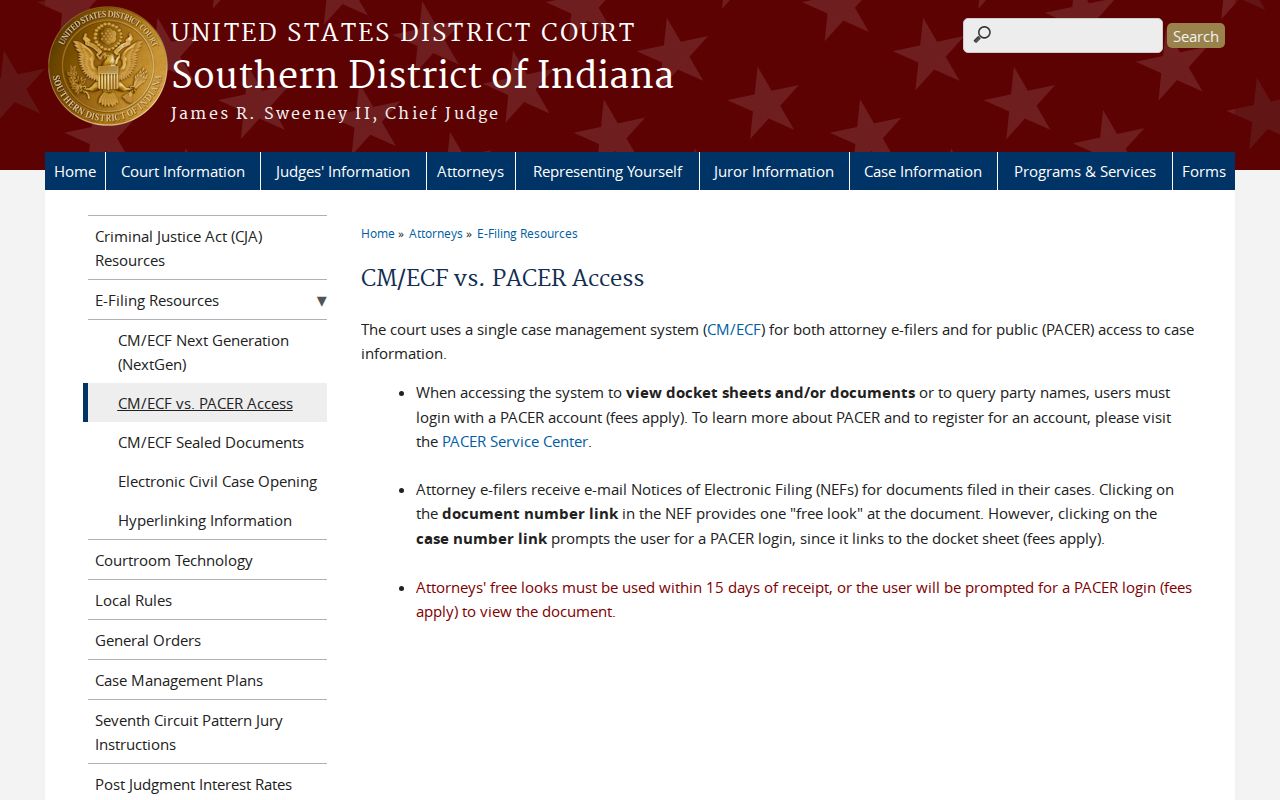
That distinction keeps a public search from being mistaken for electronic filing. Federal case-search instructions identify the public route.
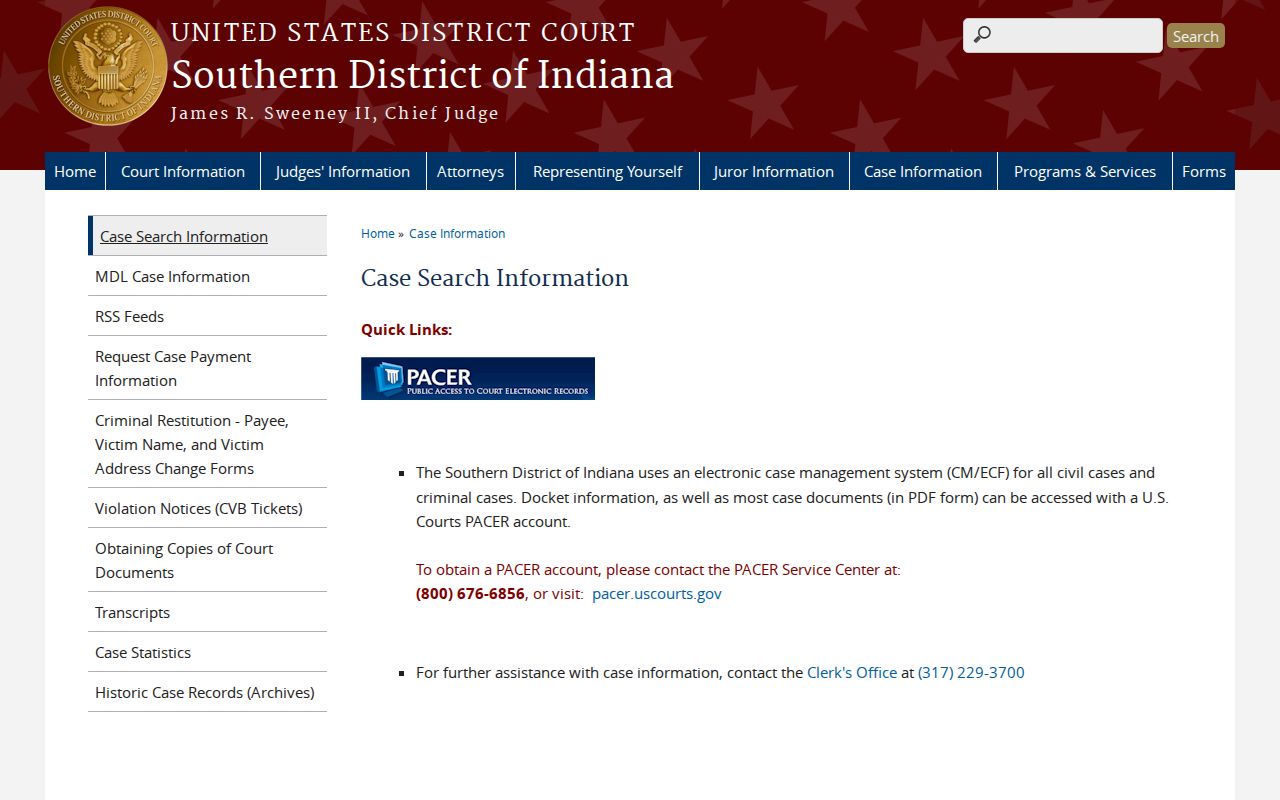
A city citation number cannot substitute for a federal case number. The e-filing FAQ explains filer access.
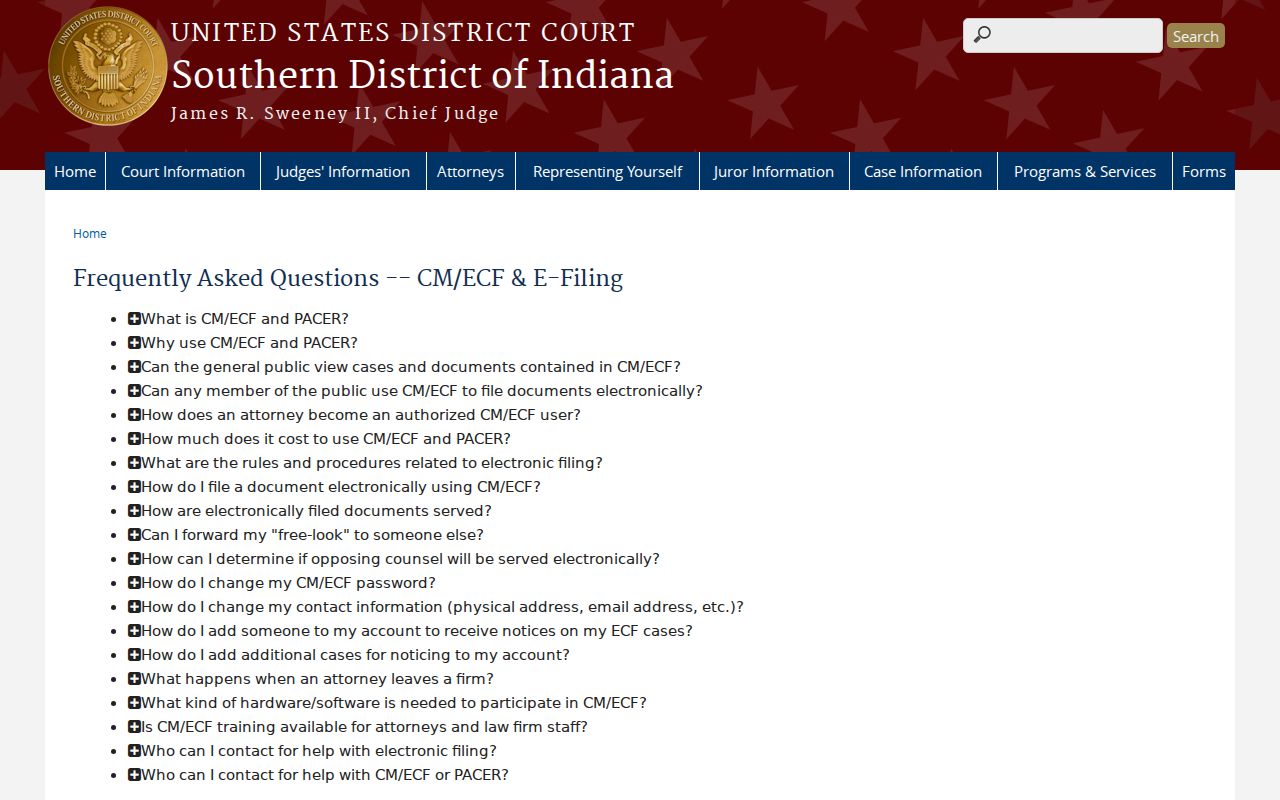
Public viewing and filing permission stay separate. The New Albany Division page identifies the venue.
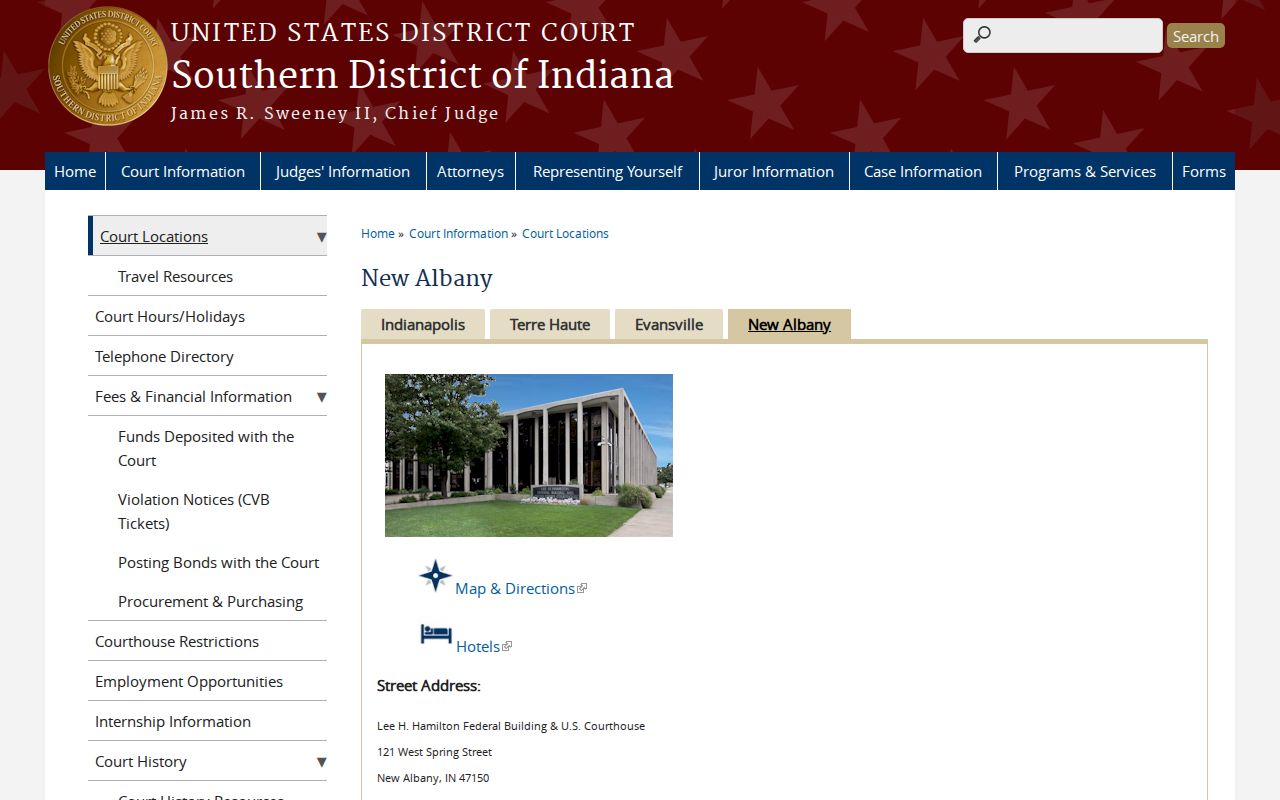
This federal court sits outside the Clark state docket structure. The live CM/ECF endpoint serves authorized filing.
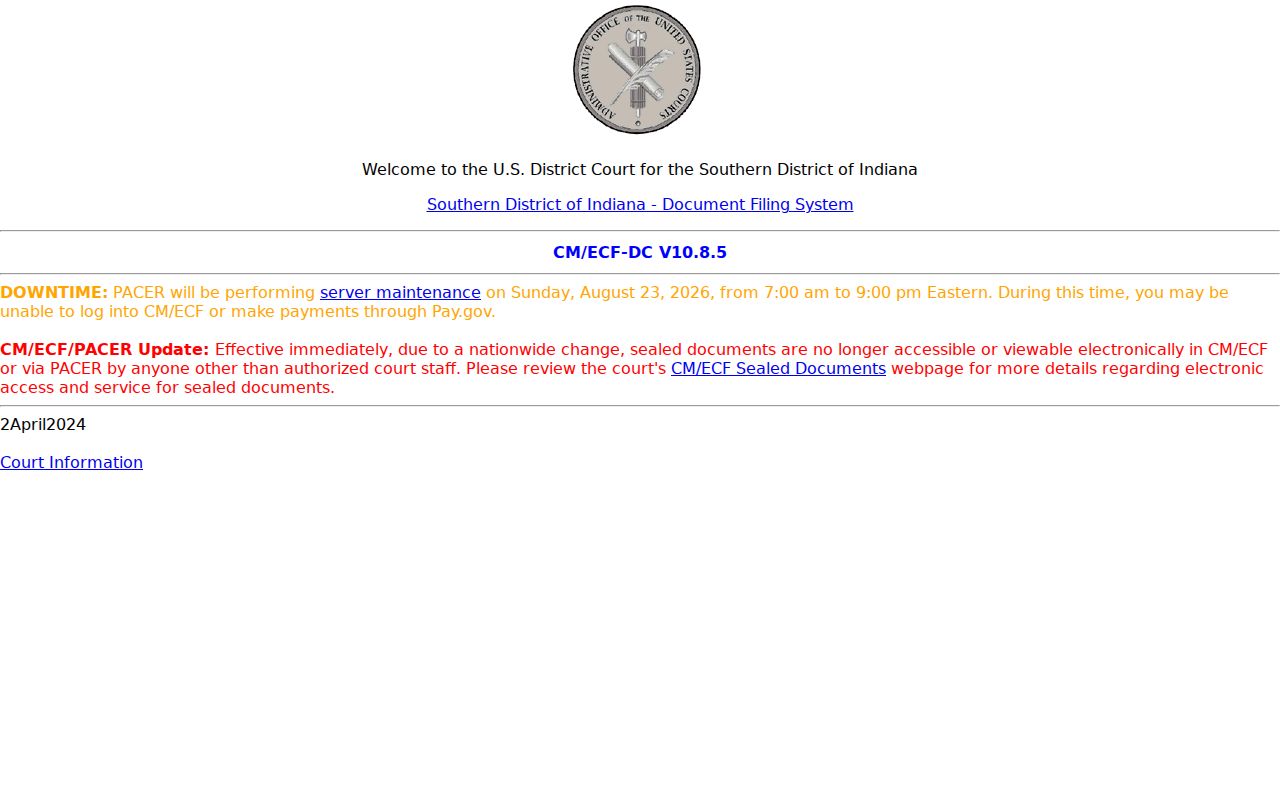
Ordinary public researchers generally use PACER.
Who Can See Jeffersonville Records
Indiana’s Access to Court Records Rule 4 starts with a presumption. A court record is public unless Rule 5 or another authority excludes it. Still, public does not mean posted online. Sealed matters, confidential cases, protected personal data, treatment records, juvenile material, and some supervision records can all be withheld. Some of them may be redacted instead.
Key Rules:
Access Rule 4 sets the public baseline.
Access Rule 5 identifies excluded cases, records, and data.
Indiana Access to Public Records Act governs public records generally, while court rules govern court files.
A MyCase printout is not certified. Ask the Clerk for certification when you need an official copy.
Jeffersonville Search Result Checks
A solid match rests on several fields at once. Check that the result names a Clark court. The case type should fit, and the filing date should land in the right window. Treat status words with care. “Open,” “closed,” “pending,” and “disposed” are system labels, not a summary of what the judge ordered. Read the CCS from the first filing through the newest event, since a later order can reset a hearing, change a party’s status, alter a charge, or shift the outcome.
Case numbers tell you a lot. Indiana’s uniform format shows the court, the filing year and month, the case type, and the sequence. Hyphens and leading zeroes may be optional when you search. Copying the number exactly still cuts down false matches. A citation or UTT number works differently. It may lead to a payment record, while the Odyssey case number leads to the court summary.
Conflicting facts? Call the custodian and ask whether the entry is current, whether a document is public but not online, and whether a certified copy is available. Staff can explain access and procedure. They cannot tell a party what legal step to take. This check matters most before a reset hearing, with an incomplete financial balance, or when a city payment has not yet reached the county case.