
How the Clark County Court Calendar Works
The Indiana MyCase portal puts public hearing sessions inside each case's Chronological Case Summary, or CCS. The CCS is the case's dated ledger. It records filings, orders, hearings, and other events. For a scheduled session, it can list the date and a description. It may also show the court, the session time, and the judicial officer. A result, a comment, or a cancellation can appear there too. A future line is a strong clue. It does not promise the event is still set.
Indiana Administrative Rule 9 requires daily calendars to be available electronically or by other means. Each must carry case number, caption, date, time, and location. Even so, there is no single master Clark County court calendar. The six Circuit Courts and Clarksville Town Court each keep their own settings.
| Case number | Identifies the court, filing period, type, and sequence. |
|---|---|
| Session date | The scheduled day and time. |
| Location | The court or room listed. |
| Result | An outcome entered after the hearing. |
MyCase Hearings and Clark Events
MyCase and the Indiana public events calendar answer different questions. MyCase ties a hearing session to the public case summary. The events service lists public events, but it stops short of the complete case-by-case Clark County court docket.
| Channel | Best use | Limit |
|---|---|---|
| MyCase | Case-linked hearings and CCS events | Not the official record |
| Events calendar | Public event listings | Not a complete docket |
| Assigned court | Current date and room confirmation | Needs the correct case number |
Choose Clark County for the county courts. For a qualifying matter filed with the town, choose Clark County - Clarksville Town Court.
Clark County Court Date Lookups
Use each documented channel when attendance or a deadline depends on a setting.
- Open MyCase and choose Clark County or Clarksville Town Court.
- Search by full case number. If it is unavailable, use a narrow name search and verify the case style, type, and court.
- Open the summary and find the newest hearing-session entry. Record its date, time, place, and court.
- Call the assigned court or Clerk at 812-285-6244 to confirm. The Clerk's counter is at 501 E Court Avenue, Jeffersonville.
- Ask the Clerk about a written or mailed request for an older or missing record. Do not rely on mail for an urgent calendar check.
No official source publishes one universal confirmation email or a complete counter-hours schedule. The sound fallback is a phone call with the full case number in hand.
Clark Court Phone Routing
The court directory lists Circuit 1 at 812-285-6308, Circuit 2 at 812-285-6333, Circuit 3 at 812-285-6316, Circuit 4 at 812-285-6294, Circuit 5 at 812-670-4949, and Circuit 6 at 812-670-4950. Clarksville Town Court is 812-283-1505. When you call, give staff the complete case number and the setting shown online.
Court Settings: What Each Field Means
A setting is just a scheduled event, not automatically a trial. One hearing might cover a single motion, a disposition records an outcome, and a continuance records a postponement. Read the event line together with the CCS entries that follow it.
- Setting
- A scheduled hearing, conference, trial, or review.
- Continuance
- A postponement approved or entered by the court.
- Judicial officer
- The judge or magistrate assigned.
- Converted event
- An older entry imported from a prior system.
The Odyssey history marks Clark conversion milestones in 2010, 2016, and 2021. A converted entry may lack details that sit in the original paper file.
Clark Traffic Wednesdays in 2026
The official 2026 traffic calendar sets traffic court at the Clark County Judicial Center, room 137, at 8:30 a.m. Sessions generally run every other Wednesday. They run from January 7 through December 16. Remember, the PDF is a schedule, not a ticket lookup. Your case notice or a later order controls.
When a Court Date Moves
Judges continue, reset, and cancel sessions all the time. MyCase can display a cancellation or a new event. The update may lag behind your first search, though. Save the case number, revisit the CCS, and call the court directly.
The MyCase help page warns that online data is not the official record. Some documents or older material simply are not there. If a date moves, ask whether a new notice or order was entered. Ask how it was sent to you.
Note: A calendar change is not a dismissal. It does not erase a separate filing deadline.
Clark County Calendar Screens
The official MyCase list view shows fields used to reach a Clark case calendar.
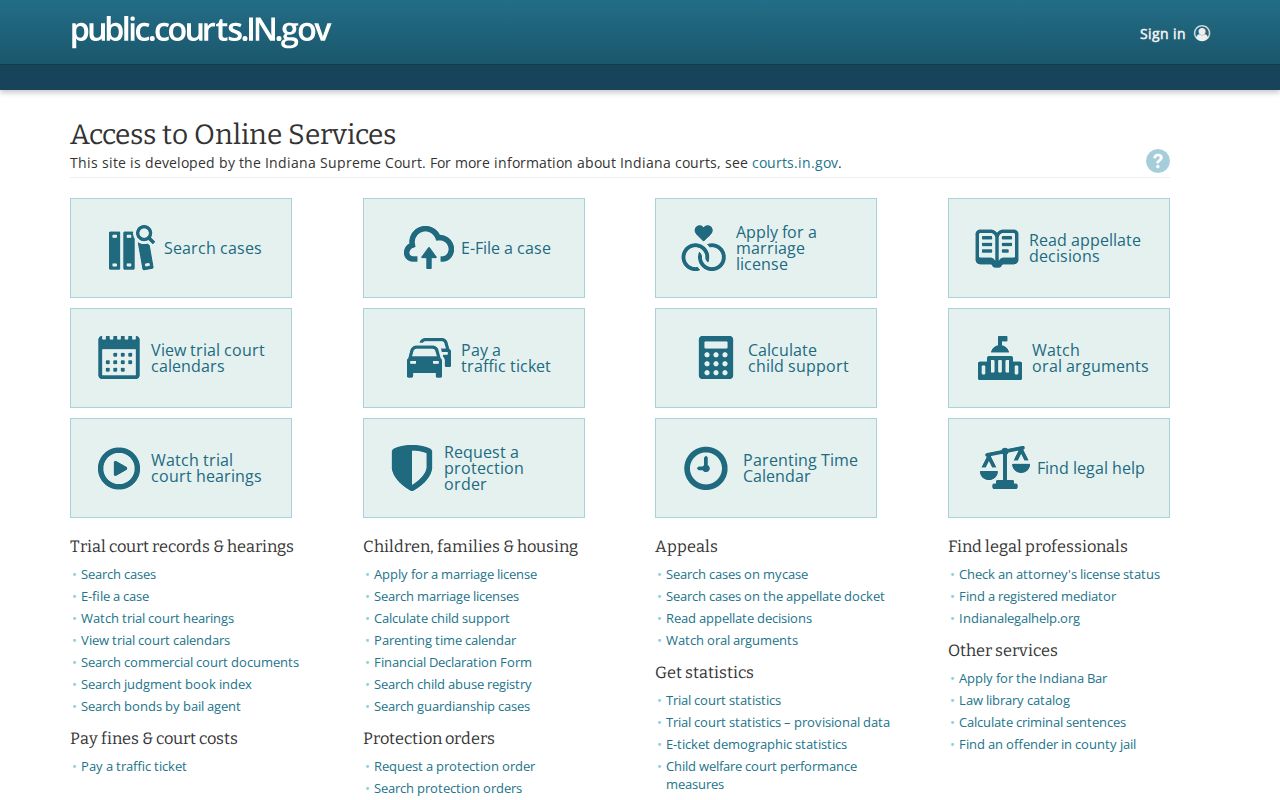
Check the court label, file date, status, and number to avoid a wrong-case match. The table view offers sortable results.
Sorting helps you find a record but cannot confirm its hearing. The case-summary template lays out hearing-session details.
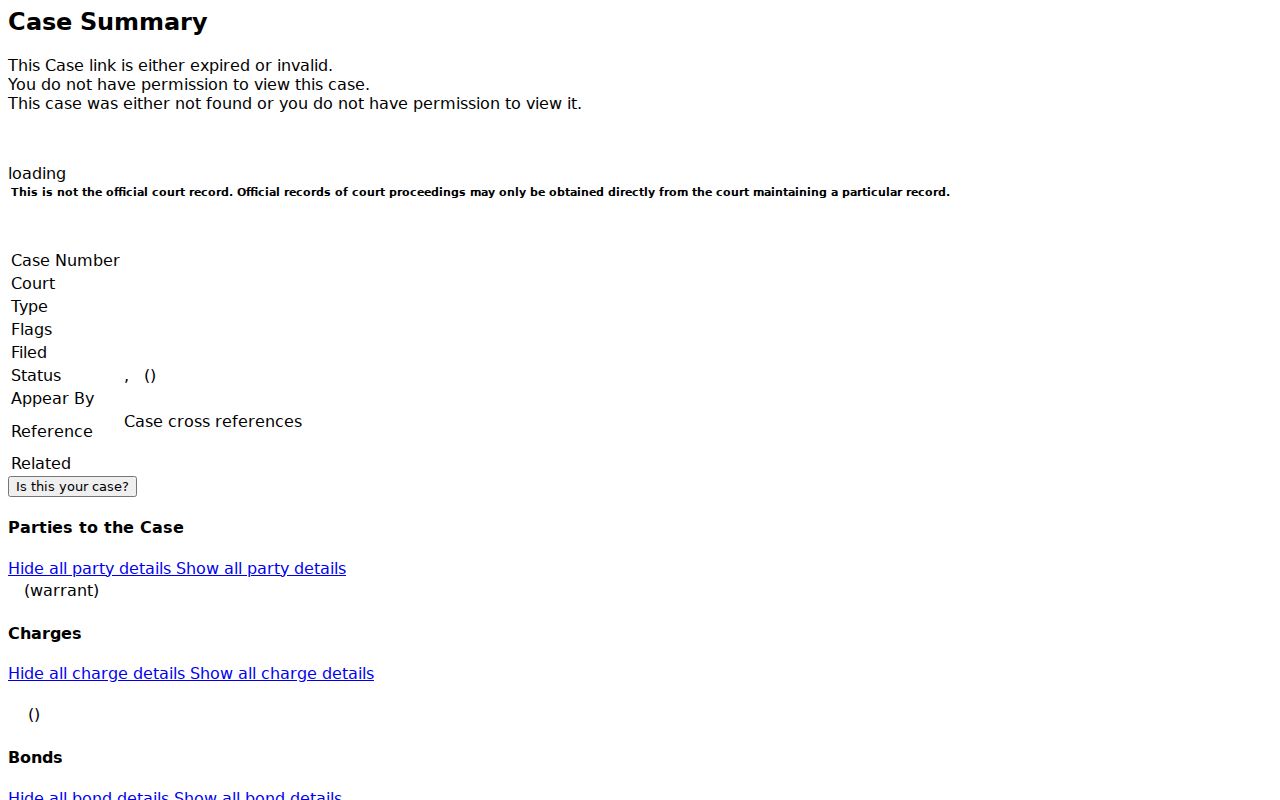
The summary ties a result to its current CCS entry. The search tips explain how exact identifiers narrow results.
Narrowing improves both online review and phone confirmation.
The help resource explains access gaps.
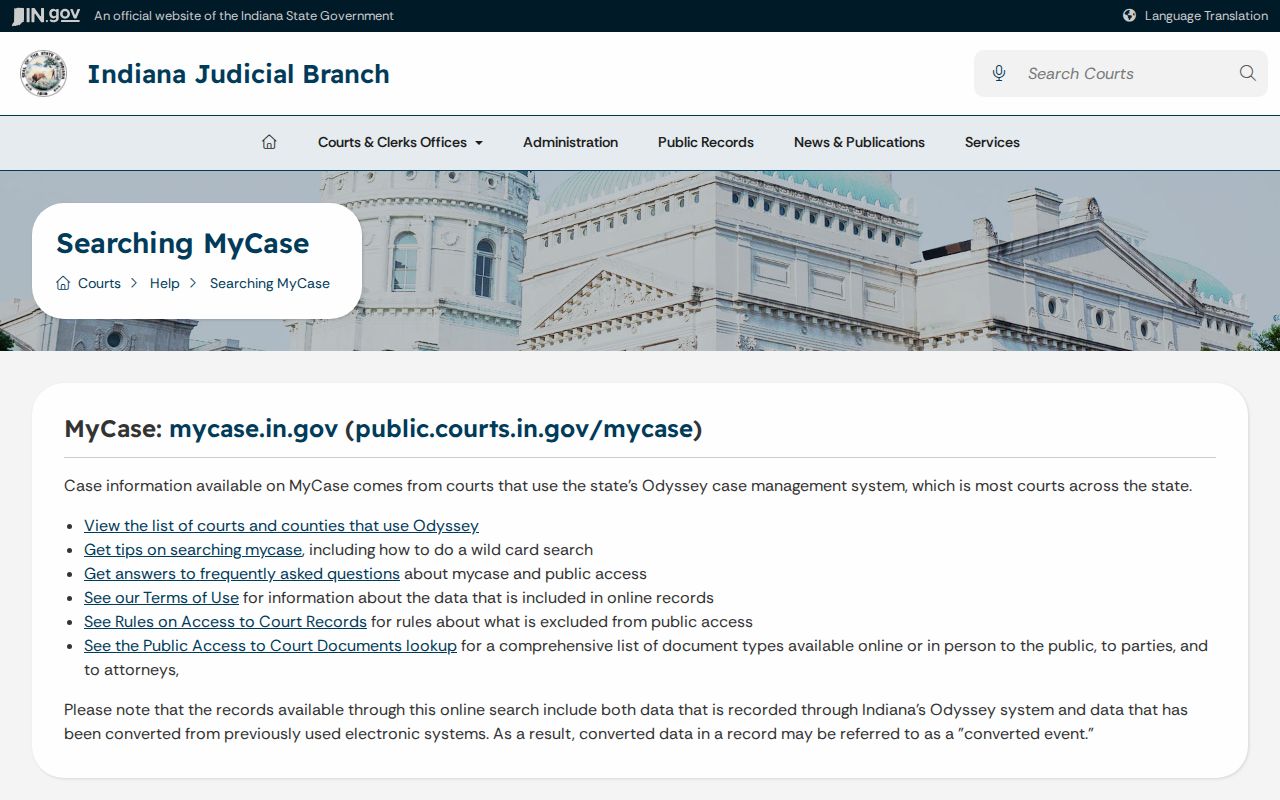
Its limits support direct confirmation.
The Odyssey page identifies participating courts.
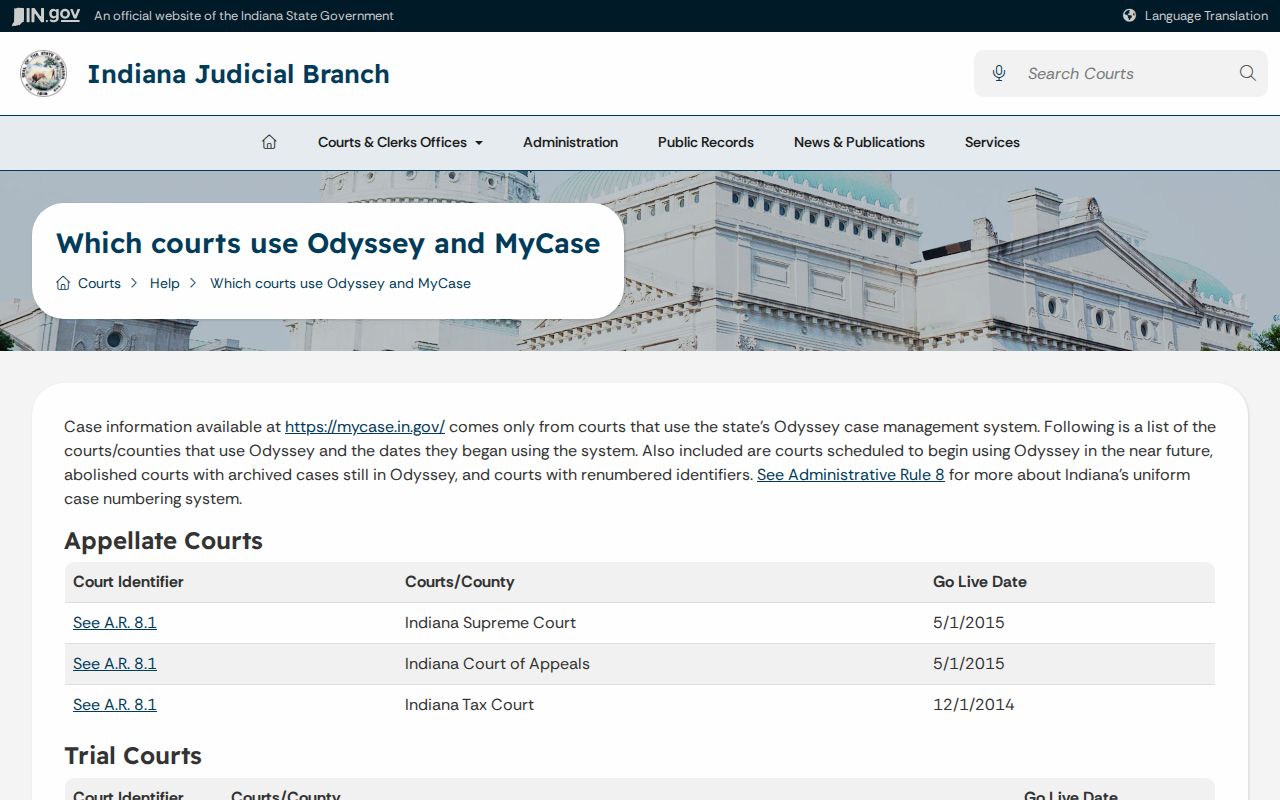
Historic labels should not override the live assigned-court field.
Missed Settings and What Comes Next
Call the assigned court right away. Ask whether a failure-to-appear entry, a warrant, a bond action, a new date, or an order was recorded, because the effect turns on the case and the order itself.
Missed a setting? Do not assume an online blank means the issue cleared. Call the court or Clerk promptly and seek legal advice when needed.
A traffic failure to appear can also trigger a BMV notice. The court record and the driver record stay separate, so confirm both.
Verify a Future Clark Setting
Start with the newest available source. Match the date printed on your notice against the current CCS. Then ask the assigned court whether either reflects a later continuance. Keep the full case number close by. Indiana case numbers may accept optional hyphens or leading zeroes in a search. But the format printed on the court document is the best one to read to staff.
If MyCase returns no record, run the number's full history. A transferred matter may carry an earlier identifier. Treat a name search as a fallback, never as proof of identity. Before trusting the hearing line, match the court, case type, file date, and case style. Confidential matters may be absent or limited under Indiana Access to Court Records Rule 5.
Best confirmation: Ask the court to repeat the date, time, location, and event type tied to the complete case number.
Clark Calendar Dates Need Context
A Clark County calendar entry only tells part of the story. One word, "hearing," might mean a brief status check. Or it might mean a real fight over an issue. "Trial" can still get reset later. "Disposed" signals a recorded outcome, yet the written order is what carries legal effect. If a session was canceled, the listing proves the change happened, not why it did. Reading a court docket this way keeps you from assuming too much from one line.
Some information stays restricted, and that should be respected. Under Rule 5, records involving juveniles, mental health, treatment, medical matters, CASA, and guardian ad litem work may be protected. Guessing to fill a gap online helps no one. The Clerk can walk you through the public request route. Only the assigned court can grant access to an excluded record through the proper procedure.
Clark County's official calendar channels work well for finding and confirming court activity. They cannot replace legal notice, a certified record, or advice on how to respond to a case.
Clark Calendar Search Checklist
Check more than the name. A Clark County docket entry only earns your trust after the case style, court code, file date, and status all line up. The newest CCS event must match what you expect too. Similar case names pop up across filing years and even other courts. Also check the event itself. Was it held, canceled, or converted from an older system? A future date on the calendar is not a result.
Visiting the Clerk? Bring the court notice and your case number. Staff can pull the public calendar entry or any order tied to a specific date. Mail requests should describe the item narrowly. A phone call to the court works better when a hearing is close at hand. Each step keeps a casual case lookup distinct from the official court record.