
Utica Court Docket Searches
MyCase's court selector offers no Utica choice at all. So any state filing tied to the town gets searched under Clark County. Grab the full case number first. It might sit on a ticket, pleading, notice, or order. That number is your best tool. No number in hand? Run a tight name search instead. Then verify the court, case type, file date, and case style before trusting the match.
Town records work differently. The Utica portal connects you to local history, meeting agendas, ordinances, and police information. Those pages can hand you an agency name, a date, or an ordinance reference. Any of those details can feed a later docket search. Just remember what they cannot do: a town page proves nothing about whether a case was ever filed.
- Classify the source as a town document, traffic ticket, or state-court filing.
- For a state case, open MyCase and select Clark County.
- Search the exact case or citation number and review the current CCS.
- For meetings, ordinances, police links, or town files, contact the Utica record custodian.
- Confirm a future setting or official copy with the Clark County Clerk or assigned court.
Utica Uses a Countywide Court System
The 2020 Census puts 860 residents in Utica. That is the smallest count among Clark County's five featured incorporated places. Size, though, says nothing about jurisdiction or how busy a court is. Clark's six Circuit Courts divide matters by case type under county allocation rules. Town lines do not steer the docket.
Official ICOR statistics track Clark County courts across categories and places. That includes confidential matters public MyCase results never show. They offer no Utica case count. One case can generate many events. A protected matter adds to aggregate activity while leaving no public record behind.
Local rule of thumb: Use Utica for town documents and Clark County for a filed Indiana trial-court case.
Inside the Utica Municipal Court
No current Utica Municipal Court exists, and there is no separate Utica Odyssey docket either. What the town portal publishes instead is government material: meetings, ordinances, history, and police links. Those are genuine public records. They are simply not court case summaries.
The differences matter when you request something. A meeting record describes municipal business. An ordinance is local legal text. A police page names an agency or service. A court CCS, by contrast, logs filings, settings, orders, and disposition events once a matter actually enters court. The source type tells you where your request goes.
Suppose a Utica town record mentions enforcement. Write down the ordinance number, the date, the issuing department, any citation, and any cause number. Armed with those facts, the county Clerk can search a filed case far better than a bare search for "Utica" ever could.
Utica Portal Clues for Docket Research
Why bother with the town portal? Because it can name the local source behind a later Clark County filing. A meeting packet may reveal an action the town took. An ordinance can supply a section number. A police link may identify the issuing body. Treat every clue as a lead, not a verdict. None of it is a disposition, and none of it proves a court action ever happened. The official Utica portal image shows the local information surface the town maintains.
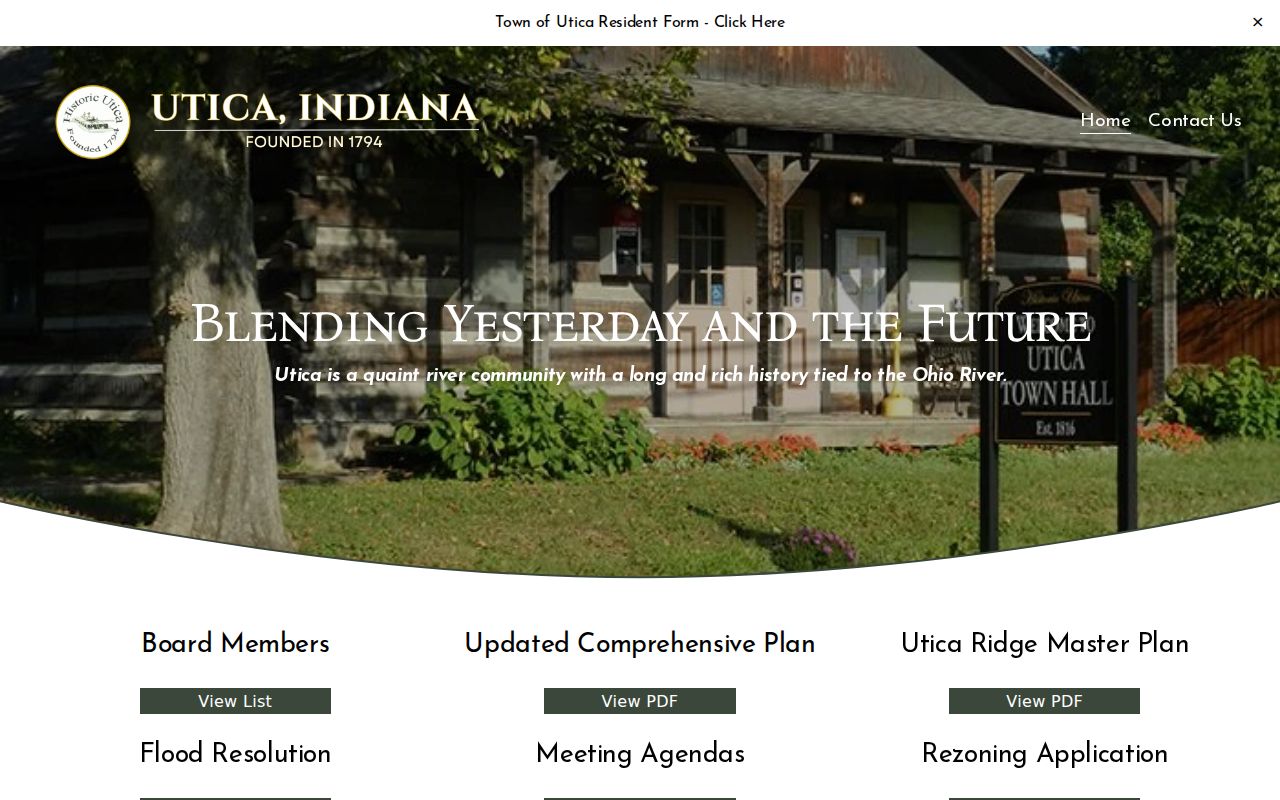
This screen is your first stop for town-record digging. Once you hold a case number or know the court, shift to MyCase or the Clark County Clerk.
| Utica source | Useful clue | Next channel |
|---|---|---|
| Meeting material | Date, board, action, subject | Town custodian, then county court if filed |
| Ordinance | Section number and legal text | Town for code; court for a case |
| Police link or citation | Agency and ticket identifier | ePay, MyCase, or Clerk |
Finding Utica Court Dates
A court date tied to Utica will sit on the assigned Clark County docket. MyCase hearing sessions can list the scheduled day, time, location, judicial officer, and cancellation notes. A future entry can still be continued or reset later. So check the newest CCS entry first. Then call the court before you show up.
| Date | The session date in the current CCS or court notice. |
|---|---|
| Time | The hearing time or shared docket-call time. |
| Courtroom | The location tied to the assigned Clark court. |
| Judge | The judge or magistrate named for the event. |
| Setting Type | A hearing, conference, trial, arraignment, or review. |
For phone contact, the Clerk's court directory lists each court's number. Give staff the full case number. Then ask them to repeat back the date, time, location, and event type.
Utica Population Is Not Caseload
Do not lean on Utica's 860-person census count. It tells you nothing about filings, parties, charges, or outcomes. Court workload runs countywide here. The official Indiana Court Statistics by County application reports Clark activity by year, court, and category. It is not a live list of Utica residents or cases.
The 2024 certified statistics reported 24,906 new Clark County filings. Those span criminal, civil, civil-violation, and juvenile groups. Within that figure sit 7,404 infractions plus many records a search for "Utica" will never surface. It measures the scale of the county system. It claims nothing about the town.
Pulling one public record takes a case number, citation, court code, or party search. Save ICOR for aggregate context. Mix the two together and a county statistic starts posing as a fact about Utica.
Utica Traffic Ticket Lookups
A ticket involving Utica gets routed by its issuing court and agency, not by town name. Indiana ePay lets you search by UTT number, driver's-license number, or the required name and birth-date fields. MyCase, meanwhile, carries the public court CCS by case or citation number. The two systems answer different questions.
Know which number you hold. The UTT number identifies the ticket in ePay. The Odyssey number identifies the court case. Keep any leading zeroes intact. A fresh citation can take up to ten business days to surface in ePay, and the Clark traffic page gives shorter general posting advice. Neither window stretches the response date printed on the citation.
Still no result? Call Clark County Traffic at 812-285-6399. Paying and contesting are separate choices with separate deadlines. For payment channels, deferral limits, and the court-file versus BMV-driver-file distinction, review Clark County Traffic Court.
Utica Police and Ordinance Routing
The municipality named on a police or ordinance record tells you who created it, not which Circuit Court later received a filing. A town ordinance number belongs in Utica's own files. Anything filed in court lands with the county. Ask the town for the underlying municipal document and the Clark County Clerk for the filed case. See Charlestown's ordinances on the city's official site.
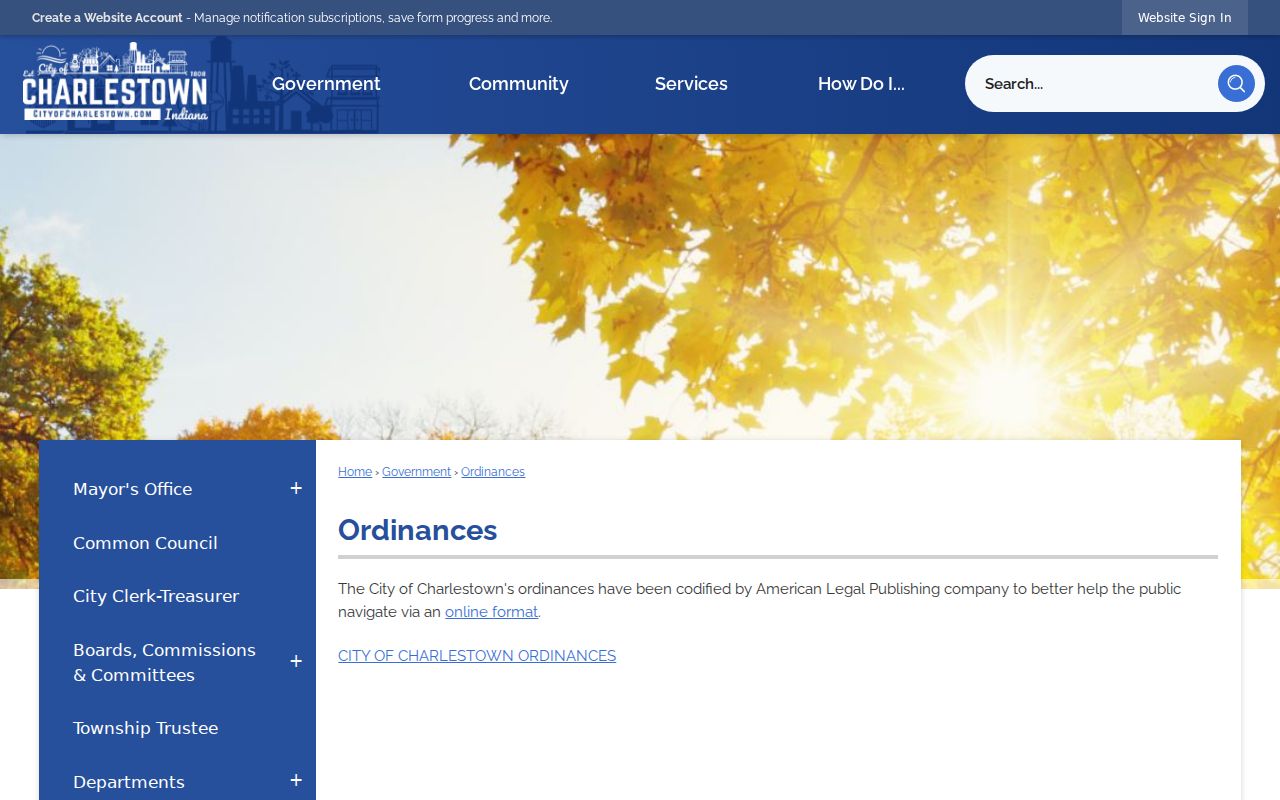
A screen from a neighboring city proves a point, not a Utica fact. Portals list whichever municipality supplied the text. Match the city name to your record. Utica legal text comes from the Utica town portal alone. Also keep a local rule apart from a court result: an ordinance may authorize enforcement, while a CCS and an order show what actually happened in one filed matter.
How Utica Cases Reach the County
Case type controls the routing once a Utica-linked matter enters the Indiana trial system. Clark infractions and ordinance violations generally go to Circuit Court 5. Traffic-related criminal cases often go to Circuit Court 3. Criminal, civil, family, probate, and protective-order categories each follow their own allocation rules.
Docket flow: Utica source or agency › Clark County filing › assigned Clark Circuit Court
Utica adds no court step to this route. The state court selector lists no separate current Utica court. Search the Clark County court docket for county-level cases. A transferred case may keep its old number, so run the docket search on both when a source lists them. The town name is just a location clue. The assigned court field in MyCase tells you the jurisdiction.
Utica and River-County Context
Utica sits in an Ohio River county whose modern court center is Jeffersonville. Over the years the county seat has moved between Jeffersonville and Charlestown. Utica still has no spot in the state court selector. Follow the live court directory instead. Geography cannot pick your court. The neighboring city of Charlestown runs its own official portal for comparison.
City websites stop at the city line. Charlestown material stays with Charlestown, and Utica material stays with Utica. Neither one works for a state case. That job belongs to MyCase and the Clark County Clerk. Geography helps you spot the agencies involved. But it supplies no case outcome, no court assignment, and no filing count.
Who Can See Utica Court Records
Rule 4 of the Indiana Access to Court Records rules opens court records to the public unless another rule says otherwise. Rule 5 shields certain cases. It also protects private details inside filings. A public Utica record may therefore show a limited header or event with no document behind it.
Key Rules:
Access to Court Records Rule 4 states the public baseline.
Access to Court Records Rule 5 lists confidential material and required redactions.
Access to Court Records Rule 9 supplies a verified petition process for limited excluded records.
The Access to Public Records Act governs public records generally. Courts follow their own access rules instead. Ask Utica for town material and the Clark County Clerk for the filed court record.
Ask the Clerk About Utica Filings
The Clark County Clerk keeps the official trial-court records. The office sits at 501 E Court Avenue, Jeffersonville. The published phone number is 812-285-6244. Before calling, gather the full case or citation number, the date, the party name as docketed, the document title, and any agency reference. Then ask whether the file is public, online, on paper, or held by another office.
For a town document, call Utica first. Confirm the right way to send the request. Transcripts go through the assigned court. That court can tell you how to reach its court reporter. If you need a certified order, say so up front. Ask the clerk for the current fee. A copy saved from MyCase can be handy for your own notes. But it is not the official certified record.